A non-surgical option for
selected early-stage thinning.
Regenera Activa uses micrografts taken from your own scalp to support weakened, miniaturized follicles. At Pure Line, we consider it only when there is still enough existing hair worth supporting.

Quick answer
Regenera Activa uses autologous scalp micrografts for selected patients with miniaturized follicles. Evidence is encouraging but still limited, response varies, and the treatment cannot recreate follicles where they are already lost.
A treatment based on
your own scalp tissue.
No hair-transplant surgery. No added synthetic material. Regenera Activa is a CE-marked device procedure. Small scalp tissue samples are taken, processed into a micrograft suspension, and injected into selected thinning areas. There is no graft implantation, but the procedure still involves tissue sampling, local anesthesia and injections.
From your own scalp
The tissue sample, cells, and growth factors all come from you. Because the material is autologous, systemic reactions are considered uncommon in suitable patients.
Support, not replacement
Regenera Activa does not create new follicles. It may support follicles that are still present but weakened. The treatment is most useful when there is still something meaningful to support.
What happens
during the session.
The entire procedure takes 60 to 90 minutes and is performed under local anesthetic. You leave the same day.
Tissue harvest
A small sample of scalp tissue is taken from behind the ear or the nape of the neck using 2.5mm micro-punches. Local anesthetic is applied first.
Processing
The tissue is processed in the Regenera Activa device to prepare a micrograft suspension from your sample.
Injection
The prepared micrograft suspension is injected across the thinning scalp using a mesotherapy technique — small injections at the correct dermal depth.
Encouraging data,
with the right limits.
Published studies on autologous cellular micrografts report improvement in selected androgenetic alopecia patients. The evidence is promising, but it does not mean every patient will respond — and it does not make Regenera Activa a replacement for hair transplantation when follicles are already lost. Dr. Mesut Demir on what the results actually show.
Systematic review and meta-analysis
A 2026 systematic review and meta-analysis of autologous micrograft technology found a statistically significant but relatively small pooled improvement in hair count. The authors considered the treatment promising while noting that many available studies involve small samples and that larger comprehensive trials are still needed. The review assessed the technology alongside finasteride, not as a replacement for it.
Short-term retrospective cohort
A single-center retrospective cohort reported short-term changes in measured hair parameters in selected androgenetic alopecia patients. A retrospective design cannot prove that every patient will respond.
Small controlled clinical study
A small within-patient controlled study reported increased hair-density measurements after autologous scalp micrografts. The sample size and protocol limit how broadly the result can be applied.
Promising does not mean proven for everyone
The published evidence remains smaller and shorter-term than the evidence available for established pattern-hair-loss treatments. Larger independent trials and longer follow-up are still needed.
What it can and
cannot do.
What it may help
Support miniaturized follicles that are still present. Help improve hair caliber and scalp coverage when the biological environment responds. In selected early-stage cases, it may also help reduce the visible progression of thinning.
What it cannot do
Replace follicles that are already gone. Reverse advanced baldness. Guarantee a specific outcome — response differs between patients and depends on the stage of loss at the time of treatment. It also does not stop androgenetic alopecia, so it belongs inside a longer-term plan rather than instead of one.
The response
is gradual.
Regenera Activa does not produce an immediate visible result. The biological changes develop over months. This is expected, because the goal is to support existing follicles gradually.
Regenera Activa
vs PRP.
Both are non-surgical and use material from the patient. The difference is not simply stronger or weaker. They work through different biological approaches.
| Factor | Regenera Activa | PRP Therapy |
|---|---|---|
| Source material | Scalp micrografts | Patient's blood |
| Main biological focus | Micrograft-based follicle support | Platelet-derived growth factor support |
| Typical protocol | Usually one session | Usually a series of sessions |
| Best suited for | Selected early thinning with miniaturized follicles | Supportive treatment in selected shedding or thinning cases |
| Role around surgery | May be considered as an adjunct | May be considered as an adjunct |
| Limit | Does not create new follicles | Does not create new follicles |
Who may benefit — and
who should wait.
Outcomes here are decided almost entirely by who is selected, so we turn this treatment down more often than we recommend it. What matters is how far the loss has already gone and whether there are still miniaturized follicles left to support. What the assessment covers.
Who may benefit
The treatment works best when miniaturized follicles are still present. Earlier stages usually leave more follicles to support.
Patients with stable or slowly progressing loss tend to respond better than those with rapid, aggressive thinning.
May be considered in selected men and women with pattern hair loss after medical evaluation.
It may be discussed alongside treatments such as minoxidil or finasteride when appropriate. Medication suitability, side effects, and follow-up should always be reviewed by a physician.
In some cases, Regenera Activa may be used after hair transplant surgery to support the native follicles that remain.
Who should wait
If the follicles are already gone, there is nothing for the treatment to support. Hair transplantation may be the more realistic option, if the donor area is suitable.
When thinning is progressing quickly, it may be better to stabilize the loss first.
Active inflammation, dermatitis or infection needs clinical assessment and is generally addressed before an elective scalp procedure. Timing is individual.
The published cohort excluded patients with recent cancer. This does not define a universal clearance period; suitability and timing require advice from the treating oncology team and the procedure clinician.
The published cohort did not include pregnant or breastfeeding patients, so it does not establish safety for these groups. Timing requires advice from the patient’s treating clinicians.
Simple aftercare.
The first two days matter.
Most patients return to normal daily activity the same day. There are a few simple guidelines for the first 24 to 48 hours.
Avoid washing your hair or getting the scalp wet on the day of treatment. Normal showering resumes the following day.
Gels, sprays, and dry shampoo should be avoided for the first 48 hours. Keep the scalp clean and unobstructed.
Avoid direct sun on the treated scalp for 24 hours. A hat is sufficient.
Do not rub, scratch, or apply pressure to the scalp for the first 48 hours. The micro-injection points are small and heal quickly.
The questions worth
asking first.
These come up in almost every Regenera assessment. The answers here are general information and cannot replace an individual examination.
Read the Full FAQWill Regenera Activa bring back hair I have already lost?
Is one session enough?
How is it different from PRP?
Can I have it alongside a hair transplant?
How long do the results last?
Does it hurt, and how much downtime is there?
If there are follicles still worth supporting,
this is the stage to assess.
Regenera Activa is not the right treatment for everyone. But for patients with early-stage thinning and follicles that are still present, it is worth an honest conversation. Send your photos and a brief description of what you are noticing. We will tell you clearly whether this is appropriate for your case.
Clinical context and evidence
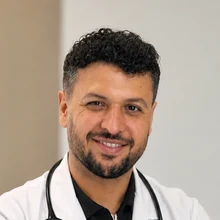
- Education
- Kocaeli University, Faculty of Medicine — M.D., 2016
- Clinical focus
- Hair restoration surgery since 2018
- Registration
- Turkish Medical Association
Dr. Mesut Demir, M.D., is the co-founder and medical director of Pure Line. This page describes general clinical considerations; individual suitability, risks, alternatives and expected outcomes require a personal assessment.
Meet Dr. Mesut Demir and view his background →- Autologous Micrograft Technology (AMT) and Finasteride for the Management of Androgenic Alopecia: systematic review and meta-analysis of efficacy and safetyDermatology Practical & Conceptual · 2026
- Short-Term Efficacy of Autologous Cellular Micrografts in Androgenetic AlopeciaClinical, Cosmetic and Investigational Dermatology · 2021
- Autologous Cellular Method Using Micrografts of Human Adipose Tissue Derived Follicle Stem Cells in Androgenic AlopeciaInternational Journal of Molecular Sciences · 2019
The medical information on this page is provided for educational purposes and does not replace a personal consultation. Treatment suitability can only be determined after an individual assessment.