Male hair transplant.
Hair loss is common —
planning early is not.
A male hair transplant moves healthy follicular units from the back of the head into a receding hairline, a thinning mid-scalp or the crown. Every stage of loss needs a different plan, so we start with your pattern and with what your donor area can safely spare — before anyone recommends a treatment.
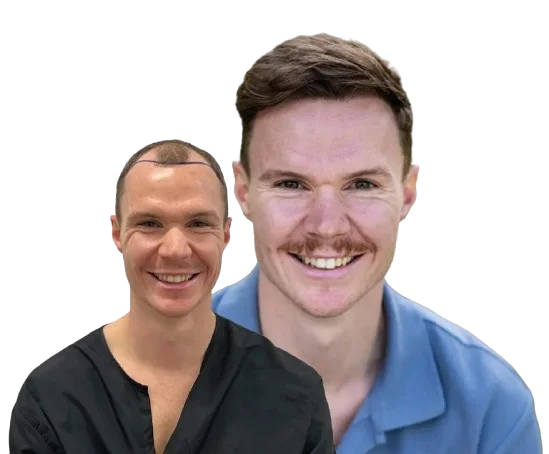
Quick answer
A male hair transplant redistributes donor hair; it does not stop ongoing loss of native hair. A responsible plan considers the diagnosis, age, donor capacity, future progression, medical options and realistic coverage.
Why your hair
is falling out.
The honest answer.
Male pattern hair loss — androgenetic alopecia — is primarily influenced by genetics and sensitivity to androgens such as DHT (dihydrotestosterone), a hormone converted from testosterone by an enzyme called 5-alpha reductase. Age, health, medicines, stress and other conditions can also affect shedding or the diagnosis, so not every case of hair loss should be assumed to be androgenetic alopecia.
Hair follicles genetically sensitive to DHT undergo a process called miniaturization — they progressively shrink, produce thinner and shorter hairs, and eventually stop producing hair entirely. This process can begin as early as puberty and follows a predictable pattern across the scalp.
Understanding your specific position on that spectrum — and whether it is still progressing — is the first thing our medical team determines. Everything else follows from that.
Where are you
on the spectrum?
The Norwood classification describes seven stages of male pattern baldness. Identifying your stage is the starting point for every treatment decision, and the earlier you identify it the more options you still have. What each stage means for planning.
.webp)
.webp)
.webp)
.webp)
.webp)
.webp)
.webp)
Two paths, one goal.
Keeping what you have —
and restoring what you've lost.
Before we consider surgery, we want to know what medical therapy can still do for the patient. For many men the honest answer is that the two belong together, rather than one instead of the other.
Finasteride or dutasteride may be discussed for selected patients after diagnosis and an individual risk-benefit conversation. Formulation, suitability, possible adverse effects and follow-up should be reviewed by a qualified prescribing clinician. What the side-effect evidence actually shows.
Topical minoxidil is an established option for pattern hair loss. Low-dose oral minoxidil is prescription treatment and off-label in many settings, so suitability and monitoring require an individual medical assessment.
PRP is an autologous adjunct that has been studied in androgenetic alopecia. Protocols and results vary, and it does not replace diagnosis, evidence-based medical options or long-term surgical planning.
Regenera Activa processes small samples of the patient's own scalp tissue into autologous cellular micrografts. It may be discussed for selected early-stage thinning, but the evidence base remains limited and response differs between patients. What the studies report so far.
For many patients the best long-term outcome comes from medical therapy and surgery together rather than either alone. No single treatment is the complete answer. How a multi-year plan is built.
Medical treatments are discussed only after individual assessment. Suitability, dose, side effects, and follow-up should always be reviewed by a qualified physician.
- Individual follicles extracted with micro-punch technology — no strip, no linear scar
- Donor harvesting possible from scalp, beard, and body when appropriate
- Allows short hairstyles without visible linear scarring
- Faster recovery with fewer post-operative restrictions
- Extraction approach adapted to donor characteristics and long-term planning
- Designed around conservative, donor-conscious restoration principles
Extraction strategy follows the donor area itself — its density, the angle the follicles leave the skin, and how much of it has to stay in reserve for the loss still ahead. Why technique names matter less than this.
- Involves removal of a linear strip from the donor area
- Leaves a linear donor scar that may influence hairstyle flexibility
- Typically associated with longer recovery and increased post-operative discomfort
- May offer higher graft volumes in selected cases
- Less ideal for patients preferring very short hairstyles
Pure Line works with FUE because it leaves the donor area intact enough to draw from again later, and leaves the patient free to wear their hair short.
Surgery is not always
the right answer.
This is how we decide.
We assess every patient as a case, not as a graft count. The consultation is not a formality here; it is the most important appointment we will have together. What a consultation should cover. Here is what Dr. Demir weighs before recommending surgery at all.
If a patient is not ready, or the donor area cannot cover the loss still to come, we say so — whatever that costs the clinic.
Book Your EvaluationThe donor zone must contain sufficient healthy follicles to cover the recipient area — not just now, but accounting for potential future loss. A patient with limited donor hair and extensive projected baldness may not be a safe surgical candidate.
A very young patient with rapid diffuse thinning carries a different risk than a 40-year-old with stable recession. Operating before the pattern has declared itself produces a result that looks wrong ten years later, because the native hair around the grafts keeps going.
Surgery and medical therapy are not mutually exclusive — they work better together. In suitable patients, medical therapy before surgery may help stabilize native hair and support more predictable long-term planning.
Hair caliber, curl pattern, color contrast with scalp, and skin elasticity all affect both the procedure approach and the visual outcome. Fine, straight, light-colored hair requires a different strategy than coarse, curly, dark hair.
A hair transplant redistributes existing hair — it does not create new hair. Understanding the ceiling of what can be achieved with your specific donor supply is the foundation of a satisfying result.
When surgery
may be the
right next step.
Not every man losing hair is a surgical candidate, and hearing that early costs you far less than hearing it late. The best results come from patients who met the right conditions at the right time. If the list opposite describes you, book a consultation.
Check Your Eligibility-
Norwood Stage III or aboveVisible thinning or recession that is affecting your appearance and confidence — and that medical therapy alone is unlikely to reverse.
-
Stable hair loss patternYour hair loss has slowed or plateaued — ideally confirmed with at least 12 months of stability, and ideally while on a maintenance medical protocol.
-
Healthy donor zoneThe back and sides of your scalp contain dense, stable follicles — enough to cover the areas of concern without depleting future reserve.
-
Good overall healthNo uncontrolled medical conditions that would complicate surgery or healing. Blood thinners, autoimmune conditions, and certain medications are reviewed at consultation.
-
Clear, realistic goalsYou understand that a transplant redistributes hair rather than reversing every year of loss, and that a hairline set where it was at 18 is the request we turn down most often.
The questions men
actually ask us.
These come up in almost every review. The answers here are general information about male pattern hair loss and cannot replace an individual assessment.
Read the Full FAQAm I too young for a hair transplant?
Will I have to stay on medication after surgery?
Will the transplanted hair fall out as well?
Can surgery fix advanced loss at Norwood VI or VII?
Should I try medication before considering surgery?
What if my hair keeps receding after the transplant?
Not sure where
to start?
Send us your photos. Our core medical team will look at your stage of loss and at your donor area, then tell you what is realistically achievable — with surgery or without it.
Clinical context and evidence
- Education
- Kocaeli University, Faculty of Medicine — M.D., 2016
- Clinical focus
- Hair restoration surgery since 2018
- Registration
- Turkish Medical Association
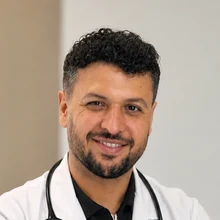
Dr. Mesut Demir, M.D., is the co-founder and medical director of Pure Line. This page describes general clinical considerations; individual suitability, risks, alternatives and expected outcomes require a personal assessment.
Meet Dr. Mesut Demir and view his background →- Male pattern baldness: classification and incidenceSouthern Medical Journal · 1975
- The effectiveness of treatments for androgenetic alopeciaJournal of the American Academy of Dermatology · 2017
- Comparison between dutasteride and finasteride in hair regrowth and reversal of miniaturization in male and female androgenetic alopecia: a systematic reviewDermatology Reports · 2024
- Efficacy and safety of low-dose oral minoxidil in androgenetic alopeciaExpert Opinion on Pharmacotherapy · 2024
- The role of platelet-rich plasma in androgenetic alopecia: a systematic reviewJournal of Cosmetic Dermatology · 2024
- Short-Term Efficacy of Autologous Cellular Micrografts in Androgenetic AlopeciaClinical, Cosmetic and Investigational Dermatology · 2021
The medical information on this page is provided for educational purposes and does not replace a personal consultation. Treatment suitability can only be determined after an individual assessment.