Eyebrow Transplant Istanbul

Eyebrows change how
the whole face
is read.

At Pure Line Clinic, each eyebrow case begins with the details that actually matter: the existing brow, the skin, the donor hair, and the kind of result that will still look natural years later.

Eyebrow transplantation at Pure Line Clinic Istanbul
Why it matters

Why eyebrow restoration
is different.

Many patients spend years compensating with pencils, microblading, or careful styling before considering transplantation. Eyebrows shape how the eyes are read and how expression registers — they affect framing in ways most people only notice when something is off.

Because eyebrows sit directly on the face, even small errors in shape, angle, or density become hard to hide. Restoration here is closer to facial design than to scalp hair transplantation.

Facial Framing

The shape, arch, length, and position of the brow affect how open, tired, youthful, or balanced the face appears.

Beyond Makeup

Permanent makeup can create colour and outline, but it cannot reproduce the dimension, movement, and softness of real growing hair.

Design principles

No standard
brow template.

Most patients want stronger framing without looking "done." A brow that works on one person can look completely wrong on another. Gender pattern, expression, ethnic features, existing brow shape, and personal preference all change the plan.

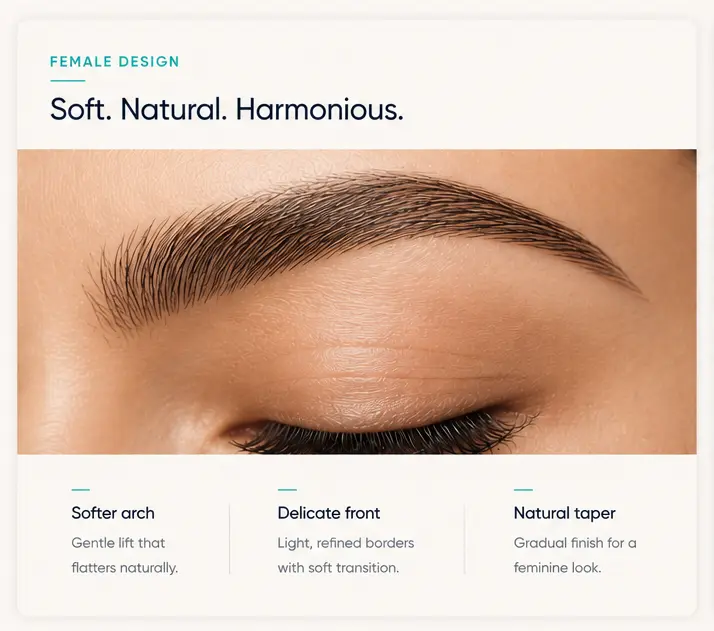
Female eyebrow restoration example — Pure Line Clinic
Female Eyebrow Profile

Female Eyebrow Restoration

Female brow restoration is usually planned around proportion, controlled fullness, and a border that does not look drawn on. The goal is not a heavier brow, but better framing.

What we look at
  • Arch proportioned to the eye and brow bone
  • Front, body, and tail considered separately
  • Fine single hairs used along the borders
  • Density kept gradual, never block-like
  • Shape reviewed and agreed before anything begins
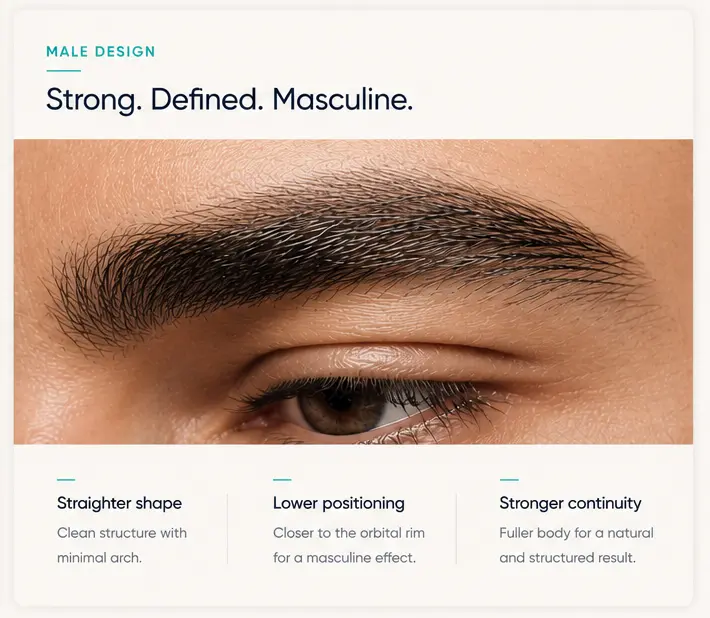
Male eyebrow restoration example — Pure Line Clinic
Male Eyebrow Profile

Male Eyebrow Restoration

Male brow restoration is usually lower, straighter, and less tapered. The goal is to add definition without making the brow look styled or sharpened.

What we look at
  • Lower position closer to the orbital rim
  • Straighter shape with minimal arch
  • Fuller tail with less tapering
  • Continuous coverage across the brow
  • Hair direction matching the existing growth pattern

These are not fixed rules. They are starting points. The final approach is always adjusted to the individual — their existing brow, features, and personal preference.

Eyebrow design restraint — Pure Line Clinic
Design restraint

Doing more is not
always doing better.

Eyebrow transplantation looks small on paper, but small mistakes become highly visible. Overdesigned eyebrows usually get noticed. That is rarely the goal.

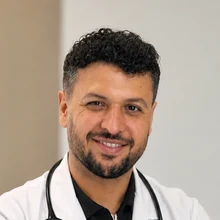
Natural eyebrows are not perfectly clean or identical. They have small irregularities and gradual transitions across the brow. Dr. Demir's approach is conservative by design: enough structure to improve framing, without making the procedure itself visible.
Direction Control

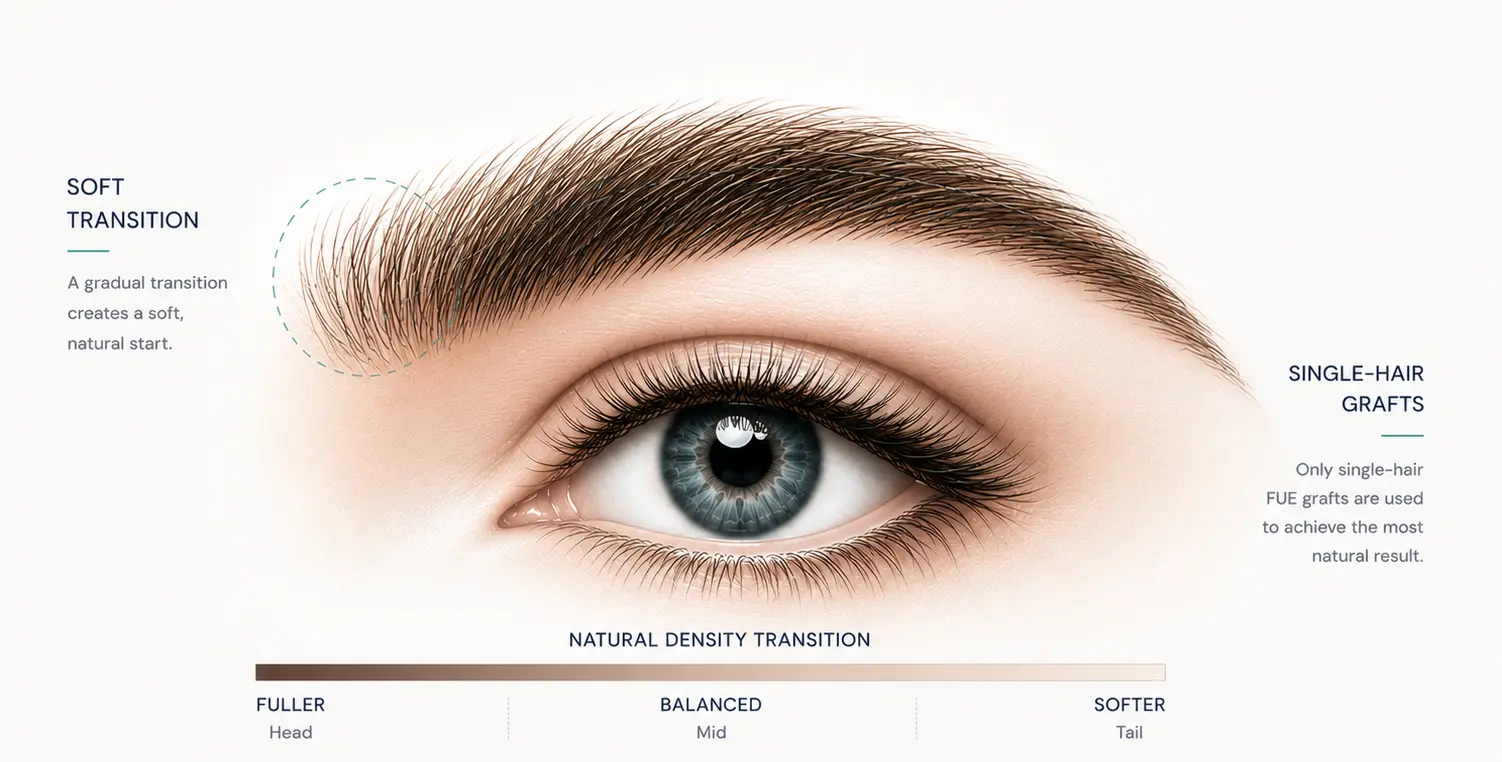
Brow hairs do not grow in one direction. The head, body, arch, and tail each require different angles and placement logic.

Soft Density

A natural brow is not filled evenly like a block. Density must build and fade gradually across the brow.

Single-Hair Precision

Only fine single-hair grafts are used to create the delicate texture expected from real eyebrow hair.

Not copied from a template

Shape, length, arch, and density are worked out from the individual — not taken from a standard brow model.

Why eyebrows thin

Why eyebrows thin
in the first place.

Eyebrow loss is not always purely cosmetic. The cause may be long-term grooming, genetics, scarring, a thyroid issue, medication, or an inflammatory condition. Before any surgical plan is discussed, the more important question is whether the loss is stable, progressing, or potentially reversible.

01

Chronic Overplucking

Years of overplucking can permanently damage follicles beneath the skin. Once the follicle is no longer active, makeup may simulate the brow shape, but real hair will not return on its own.

02

Thyroid-Related Thinning

Thyroid imbalance can affect eyebrow density, especially the outer third of the brow. Transplantation is considered only after the condition is medically managed and the loss pattern is stable.

03

Genetic Sparsity

Some patients naturally have sparse eyebrows. In these cases, transplantation can create lasting density where active follicles were limited from the beginning.

04

Scarring or Stable Hair Loss

Trauma, burns, previous procedures, or long-stable hair loss can leave visible gaps in the brow. Surgery may be suitable once the skin is healthy and the cause is no longer active.

How it works

Hair by hair.
Zone by zone.

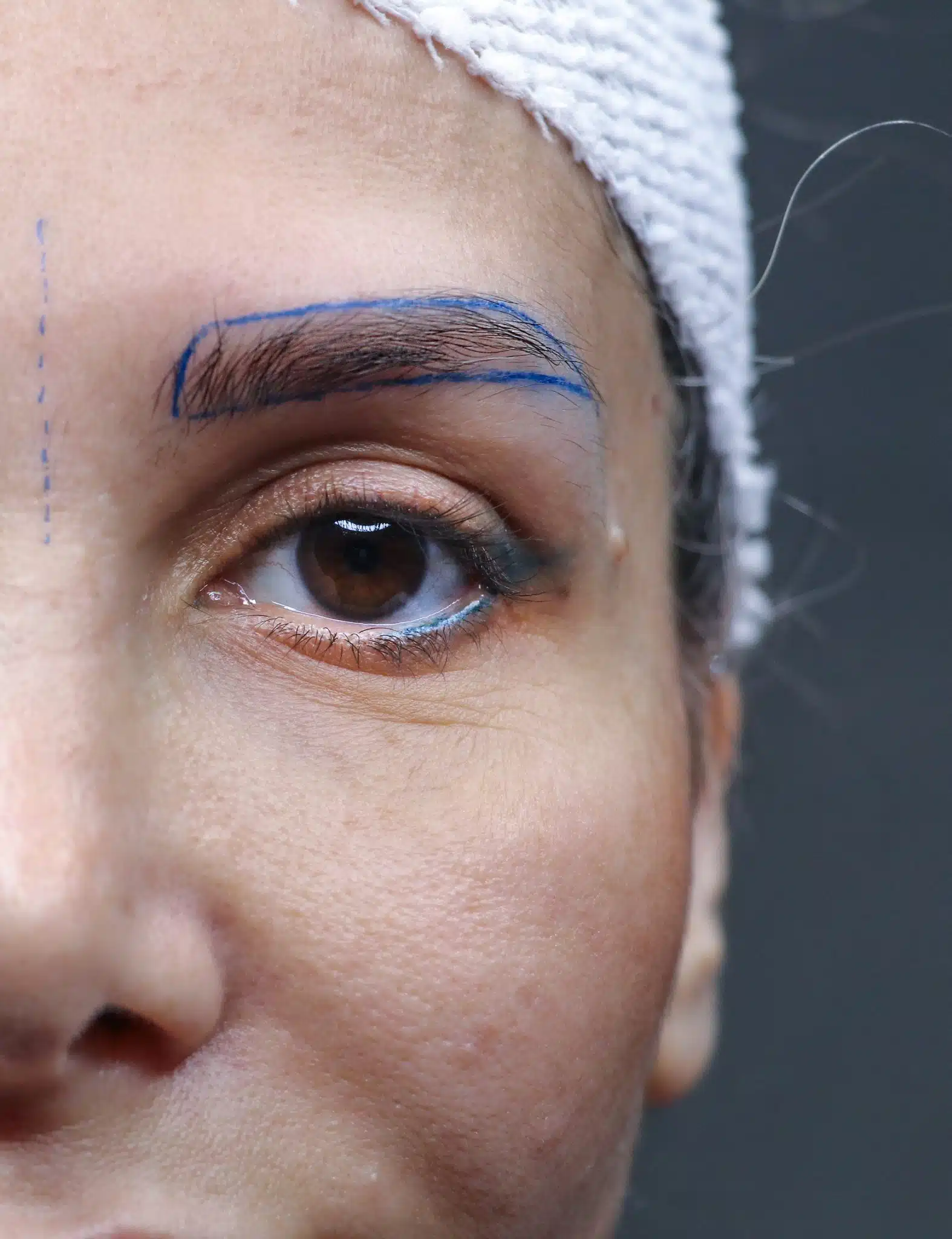
Eyebrow work cannot be rushed. Small angle changes can affect the whole expression, which is one reason Pure Line Clinic limits the surgical schedule to one patient per day. The outline is agreed first. Then fine single-hair grafts are placed zone by zone, following the direction and density each part of the brow needs.

1

Shape Design

The brow outline is drawn and reviewed before surgery. Expression, existing brow structure, hair direction, and personal preference are considered before anything is finalised.

2

Donor Selection

Eyebrow hair is naturally finer than scalp hair, so donor selection matters more than many patients expect. In some cases, hairs from behind the ear or near the nape provide a softer match.

3

Creating the Brow Channels

Tiny channels are created according to each brow zone. Direction, angle, and depth change from the head of the brow to the tail.

4

Placement According to the Brow Plan

Each graft is placed deliberately to follow the brow's natural flow. Density is built gradually so the result looks grown-in rather than drawn-on.

Important
considerations.

Donor site selection matters

Hairs from behind the ear or the nape are often preferred because their finer calibre can resemble eyebrow hair more closely than thicker scalp hairs.

The shedding phase is normal

Transplanted hairs commonly shed within the first 2–4 weeks. New growth usually begins from 3–4 months, while the final result is typically assessed around 12 months.

Local anaesthesia, single session

The procedure is performed in a single outpatient session under local anaesthesia. No general anaesthesia or hospital admission is required.

Long-term trimming is expected

Because transplanted eyebrow hairs come from the scalp, they continue to grow faster than native eyebrow hairs. Regular trimming every one to two weeks becomes part of long-term maintenance.

Honest comparison

Permanent makeup
or transplantation?

Microblading and permanent makeup suit some patients well. They create colour and outline, but they cannot behave like real hair. Transplantation works differently: it uses growing hair to create texture where pigment alone cannot.

Factor Hair Transplant Permanent Makeup / Microblading
Longevity Long-term growing hair ~ Fades over time and needs touch-ups
Appearance Real hair with natural texture ~ Flat pigment or drawn strokes
Texture Three-dimensional Two-dimensional
Existing tattoo Often possible after assessment Cannot remove existing tattoo
Maintenance ~ Regular trimming needed ~ Periodic colour refresh needed
Best for Patients wanting real hair restoration Patients wanting non-surgical definition

Note: In many cases, eyebrow transplantation can be planned over previous microblading or tattooing, as long as the skin is healthy and the pigment does not interfere with the design.

Who we treat

Are you the right
candidate?

Most suitable patients share three things: the loss is stable, the goal is realistic, and there is enough fine donor hair to work with. Not every patient who wants the procedure is ready for it — and that is part of the conversation.

Overplucking Damage

For patients whose brows no longer regrow after years of tweezing, waxing, or shaping.

Genetic Sparsity

For patients who have naturally thin or incomplete eyebrows and want lasting density.

Scar Concealment

For gaps caused by trauma, burns, previous procedures, or stable scarring.

Beyond Permanent Makeup

For patients who have microblading or tattooing but want real hair rather than pigment alone.

Stable eyebrow loss
Good general health
Calm, healthy skin in the brow area
Adequate fine donor hair for a soft texture
Realistic expectations about symmetry, density, and timing
Willingness to trim transplanted hairs regularly
Medical causes reviewed or controlled before surgery, if relevant
Honest assessment

When waiting
may be better

Eyebrow transplantation is not always the right first step. Before planning surgery, we look at the skin, the cause of eyebrow loss, the donor hair quality, and whether the result is likely to age well.

We may recommend waiting or choosing another approach when there is active alopecia areata, ongoing dermatitis or inflammation, recent microblading irritation, poor donor hair match, or a goal that depends on perfect symmetry or very heavy density.

This is not hesitation. It is part of good planning. If the timing, skin condition, donor hair, or goal is not right, waiting can protect the final result.

Dr. Demir's Approach

A conservative
approach, by design.

Dr. Demir reviews the brow in relation to the eyes, expression, and existing features — not as an isolated shape. The existing brow, eye position, donor hair calibre, and the patient's daily style all matter.

The aim is not to create a brow that looks newly made. It is to make the missing areas less noticeable and keep the result natural as the features change over time.

Pre-Surgery Design

Shape, arch, length, and fullness are reviewed before the procedure begins.

Fine Single-Hair Selection

Only suitable single-hair grafts are selected for eyebrow texture.

Direction Mapping

Each brow zone is planned according to its natural direction and flow.

Built around the existing brow

The plan starts from what is already there: brow shape, direction, density, and facial features.

Time to work carefully

One patient per day means the brow work is not squeezed between other procedures.

Eyebrows that
simply belong there.

The goal is not eyebrows that look freshly done. The goal is brows that look like they were never missing.

Send your photos and tell us what bothers you. We will look at your case carefully and tell you what makes sense before any treatment is planned.

WhatsApp